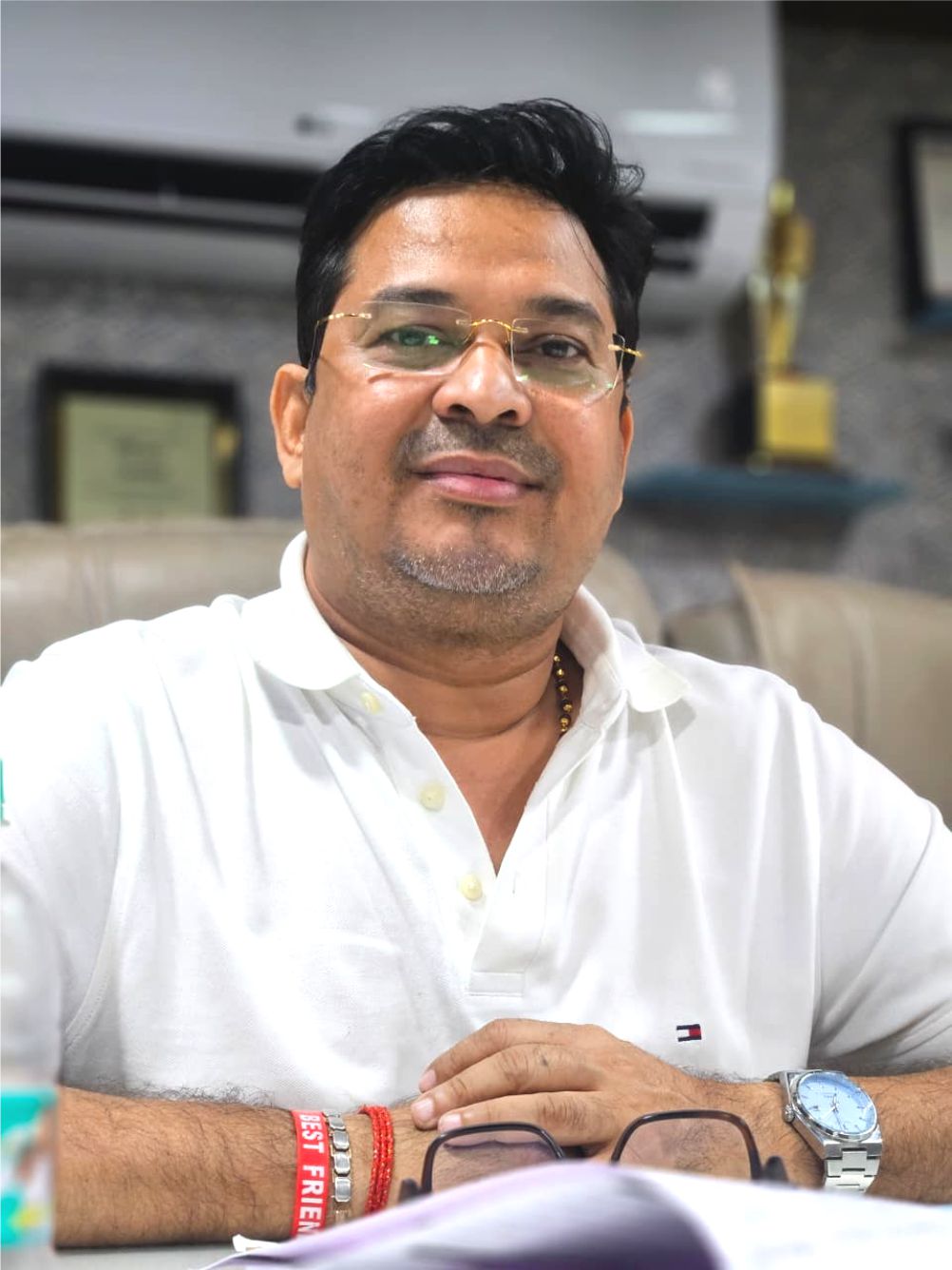
ES. As Director of Centibell Lighting Pvt Ltd, how do you see lighting evolving from a functional necessity to a strategic element in enhancing exhibition and event experiences?
Shri Pandey. Lighting today plays a far more strategic role than simply illuminating a space. In exhibitions and live events, it directly influences audience engagement, brand perception, and the overall visitor experience. Dynamic lighting, architectural highlighting, and synchronized visual environments help create immersive spaces that attract attention and increase dwell time. Brands now view lighting as an integral part of experiential storytelling rather than just a technical requirement.
With advancements in intelligent lighting systems, exhibitors are now able to create highly adaptive environments that change according to content, audience flow, and event formats. Lighting is increasingly being integrated with AV, digital content, and automation technologies to deliver seamless experiences. In today’s competitive exhibition landscape, the visual impact created through lighting often becomes one of the strongest differentiators for brands. It has evolved into a powerful tool for communication, engagement, and spatial transformation.
ES. With diverse exhibition formats and brand requirements, how do you approach customised lighting solutions that align with both creative intent and technical feasibility?
Shri Pandey. Every project has a unique creative and operational requirement, so our process begins with understanding the brand objective, venue dynamics, and audience interaction. We focus on delivering customised solutions that combine aesthetics with technical efficiency, keeping factors like rigging feasibility, power management, programming flexibility, and execution timelines in mind. The idea is to create visually impactful environments that are also practical, scalable, and reliable during live operations. Our team works closely with designers, fabricators, AV partners, and event planners from the initial concept stage to ensure seamless integration across all technical elements. We also rely heavily on pre-visualisation tools and simulation-based planning to minimise execution challenges on-site. In large-format events, adaptability becomes extremely important, especially when dealing with venue restrictions and compressed timelines. The focus is always on achieving maximum creative impact while maintaining technical precision, operational stability, and safety standards.
ES. Over the past year, Centibell Lighting has been actively executing across exhibitions, live events, and large-format productions, could you share one particularly demanding project that required full-scale integration of lighting, AV, and trussing, and what made its execution uniquely challenging?
Shri Pandey. One of our recent large-scale projects involved complete integration of lighting, AV, trussing, and show automation for a multi-zone experiential event setup. The execution required precise synchronization between content, lighting cues, structural rigging, and live show flow within a very limited installation window. Managing multiple technical teams simultaneously while ensuring safety, programming accuracy, and uninterrupted performance made the project particularly challenging. It highlighted the importance of detailed pre-production planning and seamless technical coordination.
The project also involved complex rigging calculations, high-output lighting systems, large LED surfaces, and real-time show programming that had to function flawlessly across different environments. Since multiple experiences were running simultaneously, maintaining synchronization and technical stability was critical throughout the event. Tight venue timelines and last-minute content revisions added further complexity to the execution process. Successfully delivering the project reinforced the value of integrated technical planning, experienced manpower, and strong coordination between all production verticals.
ES. Looking ahead, what emerging trends, such as intelligent lighting, automation, or immersive environments, do you believe will redefine the role of lighting in the MICE and exhibition industry?
Shri Pandey. The future of the industry is moving towards intelligent and immersive environments where lighting works seamlessly with AV, content, and automation systems. Technologies like AI-assisted programming, pixel mapping, real-time show control, and interactive lighting environments are already transforming audience engagement. We also see increasing demand for adaptive lighting systems that can dynamically respond to content, movement, and spatial design. Going forward, lighting will become a key driver in creating highly personalised and technology-led experiential environments.
Another major trend is the growing adoption of integrated control ecosystems where lighting, audio, visuals, and kinetic elements operate through centralized automation platforms. The industry is also moving towards more immersive formats such as projection-integrated spaces, sensor-based interactions, and mixed-reality environments.
As brands continue to prioritise experiential engagement, the demand for intelligent lighting solutions with greater flexibility, scalability, and real-time responsiveness will continue to rise. The role of lighting is evolving from supporting production to actively shaping audience experiences and brand narratives.