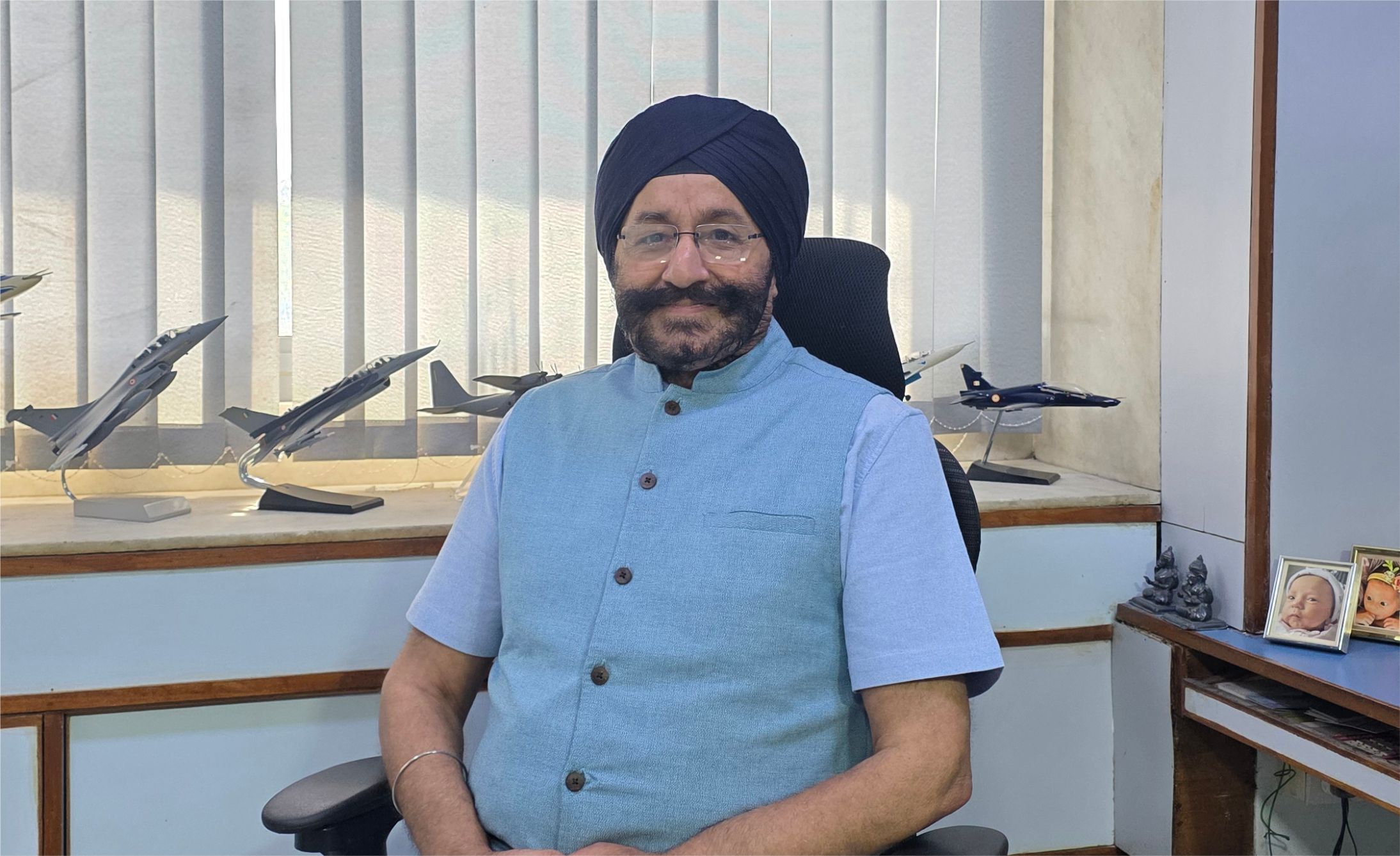
ES. You have completed four decades with RE Rogers India. Can you take us through your journey, the highs, challenges and how it all began?
Ravinder Sethi. It truly feels like yesterday when my wife Kiran and I started this journey in 1986 from a small office in Delhi. We were just five people, and at that time, we were offering specialised exhibition logistics services, something that was already present in parts of the Western world but completely unheard of in India. The exhibition industry itself was minuscule. Apart from a few shows like India International Trade Fair, Aahaar India Leather Fair and few private exhibitions such as Chemtech , Wisitex , etc. – our industry calendar could literally fit on one page.
The biggest challenge in the early years was the lack of opportunity. There simply wasn’t enough business. Many people thought my vision was unrealistic. Even within my own circle, there were suggestions to diversify into general
cargo. But I had a very strong belief that exhibitions would grow in India, and I decided to stay committed to that path.
From handling four to six exhibitions a year, today we are involved in nearly 300 exhibitions annually. From five people, we are now a 200 plus strong pan India . What makes me most proud is that we became market leaders in a sector that we helped define in India.
As I often reflect, “We didn’t just grow with the industry, we contributed meaningfully to its growth and development in India.”

ES. Interestingly, you did not originally plan to enter this industry. How did that transition happen?
Ravinder Sethi. Yes, absolutely. My original ambition was to become a Professor of Economics. I had planned to pursue a PhD, but due to personal reasons, I could not continue my academic journey and entered the private sector instead.
In the 1980s, logistics as a concept was not even understood. I joined a company involved in cargo, which had some exposure to exhibitions, though not in the structured way we see today. My work initially was in their cargo department and that gradually led me into exhibitions.
Through a series of developments and job changes, I eventually found myself deeply involved in this space. By May 1986, we formally started offering professional exhibition logistics services in India. We introduced a full turnkey model, managing everything from the exhibitor’s warehouse at origin to the exhibition stand, including multimodal transport, customs clearance and on site handling. This was a concept already present in the West since the 1970s, and we brought it to India in the 1980s. RE Rogers India was here to stay ! Looking back, what seemed like an unplanned shift actually turned out to be a defining direction in my life.
ES. The name RE Rogers India has a strong legacy. How did the company come into existence?
Ravinder Sethi. The story behind the name is very nostalgic . I was working with a company which were the Indian agent for RE Rogers UK, a company founded by Robert Ernst Rogers (RER) in 1976. At that time, foreign equity in the service sector was not allowed in India. Due to certain principles, I decided to leave that company. The UK partners approached me and suggested that I start RE Rogers India as a 100 percent Indian company, and they would support me with business. I refused financial support because of my values. I come from a very proud middle class family, and I wanted to build something on my own merit.
Eventually, based purely on trust and relationships, they allowed me to use the name. There was no formal contract in the structured way we see today. It was essentially built on a handshake and mutual respect.
I still say this with pride, “there was no paperwork, just trust and a handshake, and that trust is what built the foundation of RE Rogers India.” With the blessings of my parents and the unwavering support of my wife, I took the leap. That is how RE Rogers India was born.
ES. Over the years, your company has navigated major global disruptions. How did you handle crises like COVID?
Ravinder Sethi. Our biggest challenges have come from global disruptions like Sars and later Covid . During Covid our revenues dropped to zero overnight as the global exhibition industry came to a complete halt. At that time, nearly 80 percent of our business was dependent on exhibitions, which made the impact even more severe.
Despite this, we made a very clear and principled decision. Our biggest achievement during COVID was not retrenching a single employee, not cutting salaries, and not delaying payments to our agents or vendors. That, for me, defined true resilience.
We adapted quickly by taking up all kinds of logistics work, since the customs/ports/airports sectors were open being classified as essential. That helped us sustain through the crisis. Even today, the global environment remains uncertain, particularly in the Middle East markets like Dubai and Abu Dhabi. However, there are many strong positives. The JWC GIPR Report has ranked India number one in market attractiveness and among the top global exhibition markets.
As I have always said, “the vibrancy of our exhibition industry is directly linked to the vibrancy of our economy.” With India growing at around 8 percent and strong demand fundamentals, we are not just seeing optimism, but real growth and profitability on the ground.

ES. You have been closely involved in the development of India’s exhibition infrastructure. Can you elaborate on that journey?
Ravinder Sethi. When I started, Pragati Maidan, now known as Bharat Mandapam, was the primary venue in India. Over the years, I had the opportunity to be involved at different levels during inception and development of several major venues. These include Bangalore International Exhibition Centre, India Expo Mart, HITEX Centre Yashobhoomi IICC., and JWC. In Bangalore, I worked closely with the IMTMA’s Mr. Mukherjee, contributing particularly to logistics design aspects such as larger entry doors, which are critical for smooth cargo movement.
For India Expo Mart, I interacted with Mr Rakesh Kumar and their architect Juergen Vogel (a very dear friend) during their early planning stages itself. In Hyderabad, I was part of key discussions involving Chief Minister Mr Chandrababu Naidu and Messe Düsseldorf’s Norbert Schmidt contributing to the conceptualisation of HITEX. For Yashobhoomi, I had early discussions with Mr Amitabh Kant about the need for world class venues in India and facilitated international
engagement through UFI delegations. I was also involved in early planning discussions with Mr Shalin Tandon for Jio World Convention Centre, which today stands among the finest venues in the world .
ES. You were instrumental in forming the Indian Exhibition Industry Association. What was the thought process behind it?
Ravinder Sethi. The idea was never about creating a personal platform. It was about building a unified voice for the entire industry. At that time, I studied global association models such as UFI, IAEE, AEO, etc . However, none of these were directly suited to India’s ecosystem.
I found the Singapore SACEOS model to be the most adaptable and modified it for India. Along with industry stalwarts like Mr ML Wadhwa , Prem Behl , Sandeep Gurara , and others , we established the Indian Exhibition Industry Association (IEIA) 20 years ago. We structured it with organisers as the core pillar, supported by service providers and venues. From an initial group of around 12 to 15 members, today we have nearly 400 members, representing the entire exhibition ecosystem in India.
ES. India’s global perception in exhibitions has changed significantly. What are the key reasons behind this shift?
Ravinder Sethi. Earlier, we had to defend India’s position at global forums. Today, India is being recognised and discussed as a leading exhibition market. This transformation is driven by what I call the Five Ds – Democracy, Development, Demand, Digitalisation and Demography. Each of these factors plays a crucial role in making India an attractive destination for exhibitions. The GIPR report reflects this shift by ranking India number one in market attractiveness and placing it among the top exhibition markets globally.
As I always emphasise, “this is not just potential anymore, this is real, visible growth backed by strong fundamentals.”
ES. What advice would you give to international organisers and investors looking at India?
Ravinder Sethi. India is a long term market and it requires the right approach.
My advice is very clear and consistent. “Invest in India for the long haul, have a physical presence on the ground, and most importantly, be patient.” Those who have followed these principles are today very successful. India rewards commitment, consistency and a deep understanding of its diversity. It is important to recognise that India is not a single homogeneous market. Each region has its own strengths, industries and cultural nuances. Understanding this diversity and adapting accordingly is critical for long term success.
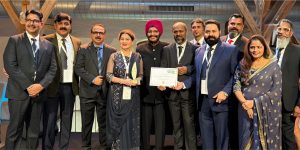
ES. As someone who has helped shape the exhibition ecosystem in India, how do you view the role of Exhibition Excellence Awards in setting benchmarks and inspiring innovation across organisers, venues and service providers?
Ravinder Sethi. I believe the Exhibition Excellence Awards has become a highly credible and respected platform for our industry, and reaching its 10th edition reflects both its consistency and growing relevance. In my view, such initiatives play a crucial role in setting benchmarks and encouraging innovation across organisers, venues and service providers. EEA creates healthy competition while also bringing the entire ecosystem together to learn and evolve.
To me, the 10th edition is not just a milestone for the awards, but also a reflection of the maturity and global progress of India’s exhibition industry.
ES. As a pioneer in time-critical logistics, what is your strategic focus for the future, and how do you plan to sustain leadership in an evolving market landscape?
Ravinder Sethi. Besides exhibition logistics , we are today also heavily involved in special import/export cargoes , free trade zone services , defense projects and sports / live event movements. We identify ourselves now as “time critical” logistics specialists , going beyond just exhibitions.
Our focus going forward is to strengthen our position as market leaders across all our time-critical logistics verticals by consistently delivering reliability, speed, and precision in every assignment we undertake. As industries become more dynamic and globally connected, the demand for seamless, responsive logistics solutions is only increasing, and we are committed to staying ahead of that curve. In so doing we will stay rooted in our core values of quality, sustainability, competitiveness, relationships, innovation, and HUMILITY.