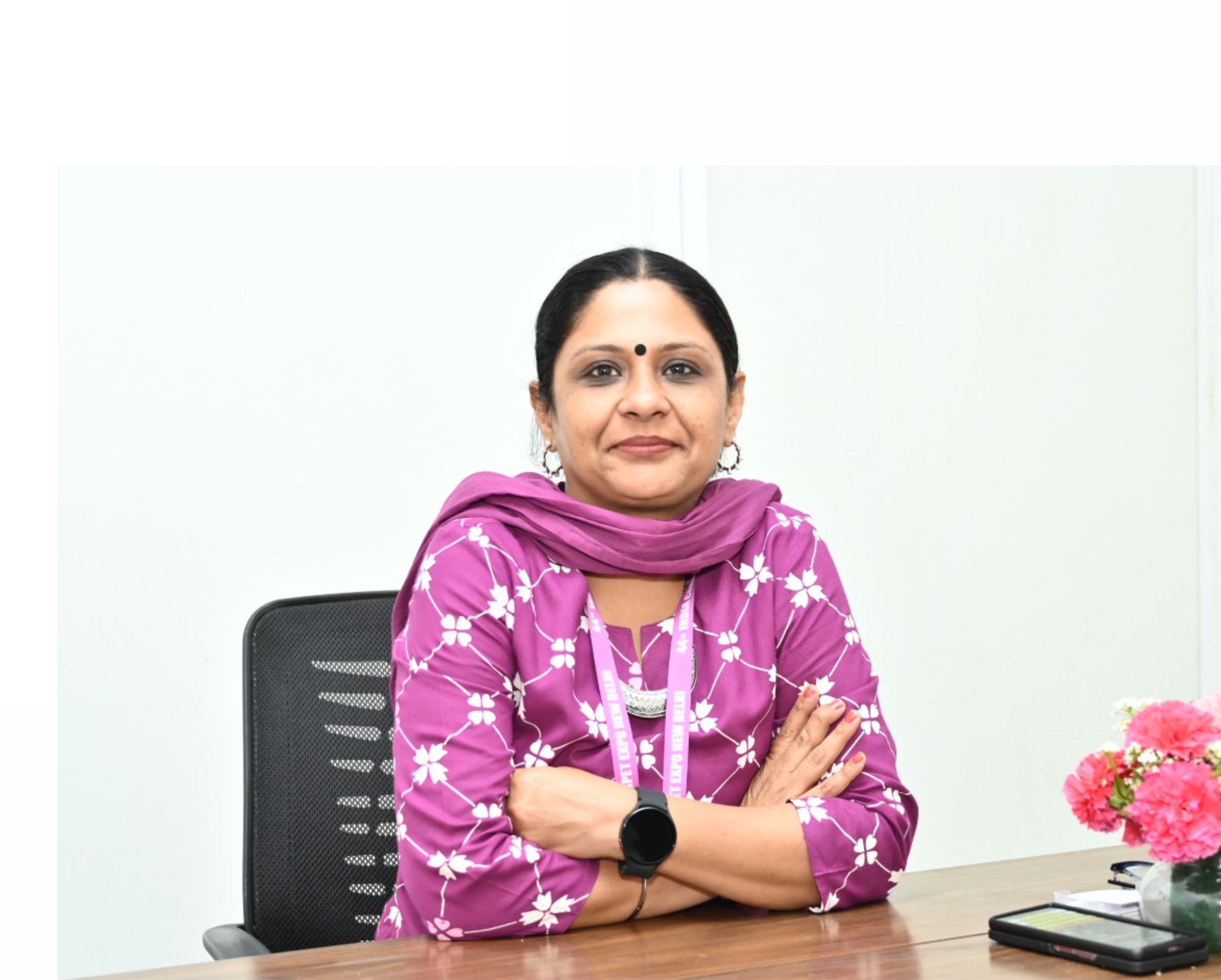
ES. As a woman leader in the export promotion ecosystem, what key experiences have shaped your journey and leadership approach at CEPC?
Dr. Smita Nagarkoti. My journey as a woman leader has been shaped by working in a space where complexity is constant and expectations are high. At CEPC, I operate at the intersection of government, industry, and artisan communities, which requires aligning diverse perspectives while keeping the focus firmly on outcomes. This has shaped a leadership style that is clear, decisive, and strongly execution-driven. What distinctly defines my approach is the ability to move seamlessly between policy-level thinking and ground realities. I place a strong emphasis on translating discussions into tangible results, whether it is supporting exporters, strengthening market access, or addressing sectoral challenges. As a woman leader, I bring a balanced approach—firm in decision-making, yet inclusive in engagement. I believe in carrying people along while maintaining direction and pace. This combination of clarity, consistency, and collaborative leadership has been central to how I have navigated my role at CEPC.
ES. In the current geopolitical landscape, how do you see global uncertainties affecting the exhibition industry, and how can stakeholders adapt to remain resilient?
Dr. Smita Nagarkoti. There is definitely more caution now in how buyers engage. Earlier, exhibitions were largely about networking and discovery, but today buyers come with a very clear agenda and a sharper focus on risk, compliance, and supply chain stability. This shift means exhibitions also have to evolve. It is no longer enough to create a platform the expectation is to facilitate actual business. Going forward, a mix of physical and digital engagement, better targeting of serious buyers, and diversification of markets will be critical. The industry will have to become more outcome-oriented rather than participation-driven.
ES. The handmade carpet sector reflects India’s rich heritage – what are the key opportunities and challenges currently shaping its global growth?
Dr. Smita Nagarkoti. What works strongly in India’s favour today is the global shift towards products that are handmade, sustainable, and have a story. Indian carpets naturally fit into that space, especially in the premium segment. At the same time, the sector does face challenges, particularly from cheaper machine-made alternatives . There is also the larger issue of sustaining interest in the craft among younger generations. I think the way forward is to position Indian handmade carpets not as a price-driven product, but as a high-value, design-led offering that reflects heritage and craftsmanship.
ES. With sustainability becoming a global priority, how is the Indian carpet industry evolving towards eco-friendly practices while preserving traditional craftsmanship?
Dr. Smita Nagarkoti. In many ways, the industry already has a strong foundation because handmade processes are inherently more sustainable. What is changing now is a more structured shift towards natural materials, better environmental compliance, and traceability. Exporters are increasingly aware that sustainability is not optional anymore. The challenge is ensuring that smaller players are able to keep pace, because the transition can involve costs and adjustments. So the focus has to be on making this shift practical and scalable, while continuing to preserve the authenticity of traditional weaving practices.
ES. What is your long-term vision for strengthening India’s position as a global leader in handmade carpets, and empowering the artisan community behind it?
Dr. Smita Nagarkoti. India is already the world leader in Handmade carpets and long-term vision is to retain and strengthen India’s identity as the global hub for high-quality handmade carpets, where the value lies not just in the product but in the story behind it. One important step in this direction is the Kaleen label that CEPC is promoting. The idea is to create a recognizable identity for Indian handmade carpets, and we are initially supporting its adoption through free distribution so that it reaches across the industry.
The aim is that eventually every handmade carpet exported from India carries this label. Each Kaleen label has an embedded QR code, which allows the buyer to connect directly with the story of the carpet—where it comes from, how it is made, and the artisans behind it.
This kind of transparency and storytelling adds depth to the product and strengthens its global positioning, while also bringing greater visibility to the craftsmanship that defines the sector.