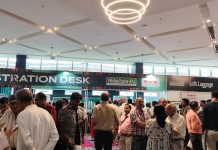
“Exhibitions are economic engines that build real business confidence through face-to-face engagement.”
ES. Can you take us through your professional journey and share how you came to lead Messe Frankfurt India?
Raj Manek. I come from a finance background and began my career with P&O Exhibitions, who were then the owners of the Earls Court and Olympia venues in London, UK. What I enjoyed most about my role was not only the finance function, but also understanding the business and operational dynamics of the exhibition industry — how the business takes shape, what drives the numbers in the accounting books and where improvements can be made. The insights gained during this phase were later reflected in my stint with ITE Group and Reed Exhibition Companies, where I was entrusted with the role of Group Operations Finance Director, followed by COO for Expo Media Group Plc in India.
Having understood the nuances of the business and how to optimise operations, there was a natural transition towards business development, which further opened opportunities to identify and nurture profitable business partnerships. In 2009, I was approached by Messe Frankfurt to give its Indian operations a new direction and unlock the potential of this exciting and challenging market. In my role as Asia Pacific Business Development Director, I was already involved in developing business in the Asian region, including India, so it was a compelling opportunity to take this forward and drive growth for Messe Frankfurt India. The focus was to strengthen existing brands, acquire new businesses and, subsequently, manage joint ventures as well as license and management agreements.
ES. ACMA Automechanika New Delhi has quickly established itself as a key platform for the automotive aftermarket. How do you see its role in advancing India’s automotive industry?
Raj Manek. Automechanika is one of Messe Frankfurt’s leading global trade fair brands, with 16 events worldwide and ACMA Automechanika New Delhi is the India’s only focused and dedicated exhibition for the auto component aftermarket. This year, the show has recorded a substantial rise in participants recording 800+ exhibitors from 19 countries including 290+ first time participants. The show will span across an area of 50,000 gross sqm and it will showcase an extensive line-up of aftermarket solutions, coinciding with a period in which both industry and government are working in tandem to position India as a global automotive powerhouse. Also, I am extremely happy about the fact the this will be the biggest ACMA Automechanika New Delhi edition so far and it is scheduled for 5-7 February 2026, at Yashobhoomi (IICC) Dwarka, Delhi.

I would like to emphasis that the mobility as well as energy sector is undergoing a major transition, with increasing emphasis on clean fuels, electric vehicles, hydrogen and other advanced technologies. This transformation calls for more sophisticated spare parts and systems capable of supporting these emerging technologies. ACMA Automechanika New Delhi captures these latest trends and serves as a fertile meeting ground for manufacturers, traders and OEMs to identify new prospects and forge meaningful business relationships.
ES. With evolving technologies and new business models, how do you envision the future of trade fairs and exhibitions in the next decade?
Raj Manek. Exhibitions are economic engines. These are industry specific platforms that bring face-to-face business confidence between buyers and sellers which can open not just business opportunities but make you meet right people and experts. The business formats are evolving strongly in the digital space yet and I must acknowledge how close the world has come if we look at the period of last decade from 2015 – 2025. However, digital space cannot rule out the power of personal encounters – which is the core belief of Messe Frankfurt Group. The future of trade fairs will be shaped by stronger integration of physical and digital experiences, alongside improving infrastructure smarter formats and more curated engagement for visitors and exhibitors. Across India, exhibition venues and supporting ecosystems are steadily upgrading to meet global standards, reflecting country’s growing importance on the international trade fair map. At Messe Frankfurt India, we see our role as building stronger, globally relevant platforms that present the potential of Indian industries to the world, while simultaneously enabling international expertise buyers, and technologies engage with India. This two way exchange will continue to drive industry’s growth and reinforce India’s position as a key hub for global business and innovation.
ES. Could you share any upcoming initiatives or strategic collaborations that Messe Frankfurt India is planning to further support industry development in India?
Raj Manek. Through its exhibitions and conferences, Messe Frankfurt India continues to support Indian industry by creating platforms that are uniquely designed to bring together industry, academia and government. This tripartite collaboration provides much-needed momentum to various sectors and has reinforced Messe Frankfurt’s position as a trusted organiser. 2025 was particularly significant in terms of collaborations and alliances for example Media Expo, which initially took place in Mumbai and New Delhi, was successfully expanded to Chennai market and we organised its launch edition, co-located with Print Expo Chennai, both receiving an exceptional response from the industry.
Messe Frankfurt Trade Fairs India and MEX Exhibitions Pvt. Ltd. entered into a partnership for Gifts World Expo and Paperworld India. Another significant and very recent development is the MoU signed with the Department of Textiles and Guidance Tamil Nadu, Government of Tamil Nadu to launch Techtextil India Summit in 2026. Beyond these exhibitions, the conference division has also gained strong momentum, with two of the most influential global conferences making their entry into India. The Asia edition of the Dornbirn Global Fiber Congress – Asia was held in November as a collaboration between Austrian Fibres Institute and Messe Frankfurt Trade Fairs India. The PCIM Asia New Delhi Conference, part of the renowned global PCIM series organised by Mesago Messe Frankfurt GmbH, a subsidiary of Messe Frankfurt GmbH. The launch edition received a spectacular response at PCIM Asia New Delhi. The conference attracted more than 550 delegates and focused on power electronics, intelligent motion, renewable energy and energy management, underlining India’s growing relevance in these domains.
Additionally, several focused alliances were introduced across our shows:
Sporttech Pavilion: A dedicated Sporttech Pavilion on sports textiles at Techtextil India, developed in collaboration with Concepts n Strategies, experts in the activewear and athleisure industry, underlined activewear as a rapidly growing segment within technical textiles.
MSME Pavilion: With the support of the Ministry of Micro, Small and Medium Enterprises (MSME), LED Expo New Delhi 2025 featured a dedicated MSME Pavilion, where more than 40 Micro and Small Enterprises showcased their latest lighting products and innovations, reinforcing the role of MSMEs in driving innovation and localisation in the lighting sector.
Looking ahead to 2026, Messe Frankfurt India is enthusiastic about further diversifying its portfolio and continuing to play an active role in India’s growth story through meaningful platforms, partnerships and knowledge-led initiatives.