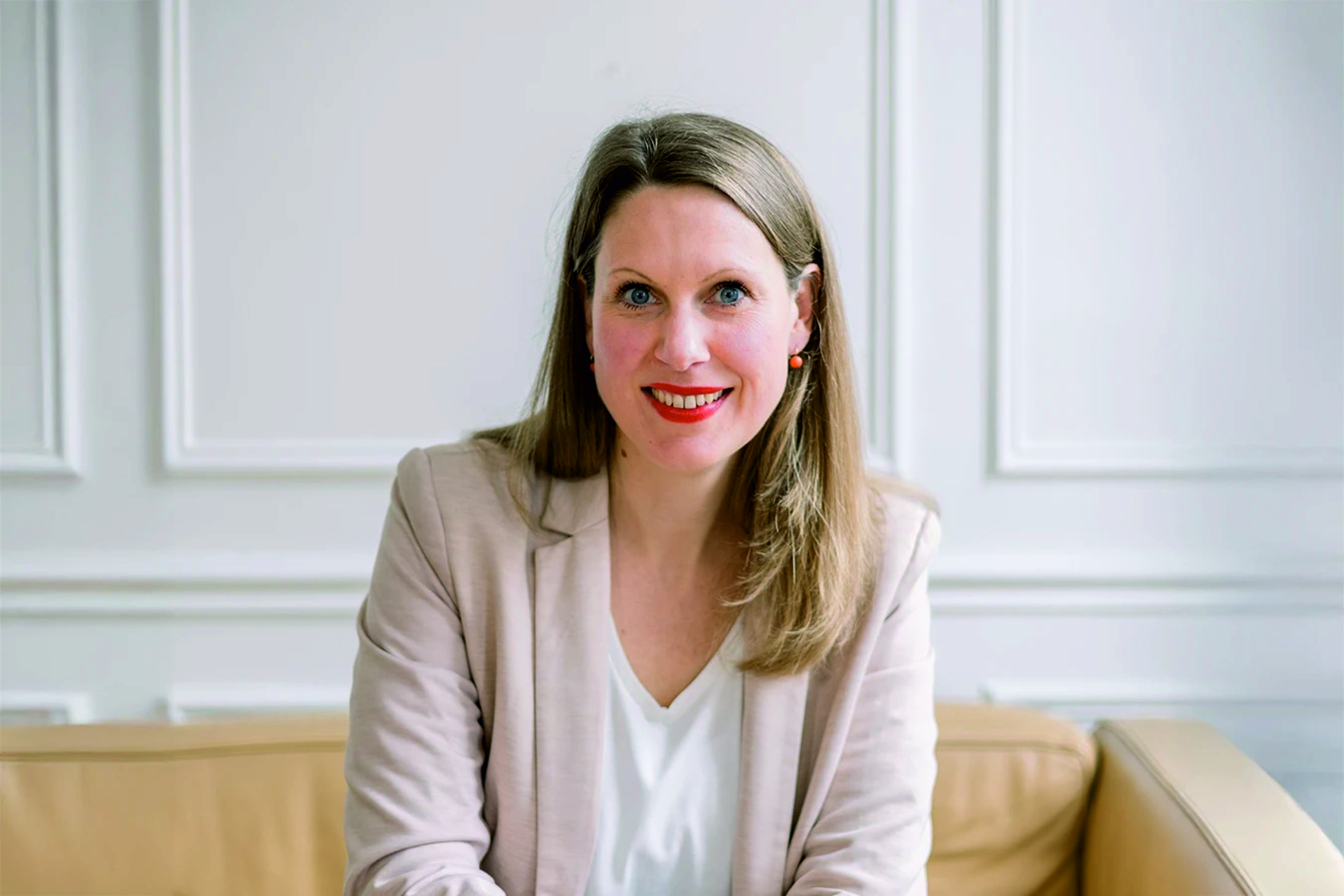
ES. You’ve spent 15+ years working at the intersection of mediation, conflict management and the business events world — can you share how your journey evolved from exhibition and event management into founding Herberholz Mediation Services?
Angela Herberholz. My journey in mediation and business events was intertwined from the very beginning. I studied exhibition and event management at DHBW Ravensburg (Germany) while completing an additional year in mediation and conflict prevention in a business context. The bridge between both fields was immediate. Constructive dialogue is essential in an industry built on collaboration. I started with a German exhibition organiser, working across Morocco, Algeria, Ukraine, and Russia. Early on, I saw how delivery depends not only on planning, but on how people handle different expectations and working styles.
I then moved to Paris to deepen my mediation practice at the International Chamber of Commerce, and later spent nine years at UFI in multiple roles. Mediation stayed with me in parallel throughout. Over time, I kept coming back to one
observation: our industry is fundamentally a relationship industry. Exhibitions are marketplaces for products, yes, but more importantly, they are marketplaces for trust. Strong business relationships include disagreement and tension. The difference is whether people address it early and well. That is also why I launched a biannual survey to understand how organisations handle interpersonal strain.
My practice celebrates its third successful year in March 2026. Today, I build dialogue infrastructure for the business events industry. I support organisers, venues, associations, and service providers through mediation, facilitated dialogue, and upskilling. And personally, what still draws me to this industry is the mix of international collaboration and human connection. It is where relationships are built, tested, and strengthened in real time.
ES. Your mediation and conflict management work spans multiple sectors. What unique challenges do you see in communication and dispute resolution within the exhibitions and live events ecosystem, and how can they be addressed proactively?
Angela Herberholz. What makes exhibitions and live events unique is not that tension happens, but the conditions under which it happens. Deadlines do not move, the work is highly visible, and delivery depends on a long dependency chain.
Three patterns stand out. First, when timelines tighten, empathy and curiosity are often the first things that disappear. Messages get shorter, assumptions multiply, and small issues start to feel personal. Second, tensions that simmer during planning can escalate onsite within seconds, when fatigue and urgency leave little room for careful conversation. Third, because organisers, venues, service providers, exhibitors and agencies are interdependent, one breakdown quickly cascades across the wider working system.
A short example from an international show team illustrates this. Two long-standing colleagues were joined by a new team member from another industry. A clash around work-life boundaries hardened over time, and onsite strain turned it into avoidance and open friction. After 2.5 days of facilitated dialogue, the team rebuilt understanding and agreed practical ways of working. The feedback afterwards was, “I wish we’d talked about this months ago.” The proactive opportunity is to treat dialogue like infrastructure, not a last resort. In practice, that can be simple. Upskill leaders and teams in early dialogue and de-escalation, to strengthen how they navigate tension and preserve relationships when stakes are high. And to create a visible resolution pathway, so people know where to go early and what happens next, before issues become formal or public.
For reference, the 2025 edition of my biannual industry survey is published as “Navigating Workplace Tension” here: www.herberholzmediation.com/navigating-workplace-tension
ES. As a lecturer, mentor and global facilitator, what emerging skills or competencies do you believe future exhibition professionals must master to thrive in today’s interconnected and culturally diverse environment?
Angela Herberholz. In the business events industry, thriving is not only about operational excellence. It is also about navigating human dynamics well, especially when collaboration depends on many stakeholders and diverse expectations.
Five competencies stand out.
First, tension escalation prevention. I deliberately say tension, not conflict, because the most important moments happen before anything is openly addressed. Noticing early signals such as silence, avoidance, or a drop in collaboration allows teams to respond before situations escalate.
Second, de-escalation. In busy phases, misunderstandings can spiral fast, and the ability to slow things down without losing momentum protects both delivery and working relationships.
Third, alignment across the dependency chain, including the question, “What do we do when things go wrong?” Healthy business relationships create clarity early on how issues are escalated, and how accountability is shared.
Fourth, self-awareness, especially knowing one’s limits. Recognising when facilitation support is useful and asking early, prevents cracks in trust and collaboration.
Fifth, the ability to hold constructive, difficult conversations, supported by curiosity. Taking time to understand the why rather than assuming intent is often what keeps culturally diverse teams aligned.
The good news is that these competencies are not new. Most of us already draw on them. The opportunity lies in applying them in moments that feel uncomfortable, complex, or uncertain, when it would be easier to avoid the conversation.
ES. Mediation isn’t widely used in many parts of the exhibition industry. From your experience, how can organisers and stakeholders integrate mediation and constructive dialogue into industry practices to strengthen collaboration and resilience?
Angela Herberholz. In parts of the business events industry, mediation is still viewed as something you use only when a situation has already become serious. In my experience, it creates value when it is positioned as a practical form of support that can be used early, without automatically turning into a formal complaint process. Two shifts help organisers and stakeholders integrate this into everyday practice.
First, make the options visible and easy to access. People often stay silent because they are unsure what the next step should be, or they worry that speaking up will trigger escalation. A clear, well- communicated approach helps, who someone can speak to, what support exists, what confidentiality looks like, and when a neutral third party can be brought in. Second, equip key roles with a small set of dialogue tools they can use in real situations. This includes how to name tension without blaming, how to structure a difficult conversation so it ends in clear agreements, and how to recognise when neutrality is needed because the topic is too loaded internally. Some organisations train internal facilitators for early conversations, with external mediation available when trust or power dynamics require it.
What often shifts mindsets fastest is experiencing the impact directly. As Damion Angus, Group Managing Director at Montgomery Group, shared after using external mediation support, “Not only did we resolve an immediate dispute within our business but we also laid the foundation for improved communication and collaboration moving forward.” Ultimately, integrating mediation is not about adding bureaucracy. It is about protecting working relationships and keeping collaboration functional in complex environments.
ES. Looking ahead, what exciting initiatives, programs or developments is Herberholz Mediation Services focusing on — especially those that could positively impact communication, leadership and collaboration in the exhibitions sector?
Angela Herberholz. A key focus of Herberholz Mediation Services is making dialogue infrastructure more accessible to the business events industry. In other words, supporting professionals to discover and apply practical tools to address interpersonal strain early, and at the same time save time and costs in doing so.
This focus currently shows up in three ways.
First, I continue to design and deliver bespoke workshops and facilitated sessions that translate into day-to-day practice. They support teams build a shared language for addressing disagreements, holding constructive conversations, and creating resolution pathways that people actually want to use.
Second, it shows up in my industry-facing awareness work. Many organisations still associate conflict resolution primarily with formal procedures, so I focus on raising visibility of early-stage options and what good support can look like. In 2026, this is reflected in speaking and workshop invitations with industry associations, including UFI and AIPC, as well as communities such as Women in Exhibitions.
Third, it shows up in research that keeps the conversation grounded. Through my biannual survey with global reach, I continue to track how organisations handle interpersonal challenges, what is improving, and where support systems can be strengthened. The objective is to keep the topic concrete, usable, and relevant, so constructive dialogue becomes part of everyday leadership and collaboration.