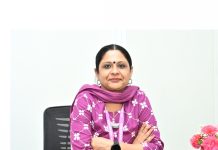
Medical Fair India drives knowledge and meaningful partnerships
ES. How does your personal vision align with Messe Düsseldorf’s global philosophy of building world-class industry platforms?
Ajay Kumar Gulati. My approach has always been centered on building platforms that create long-term value for the industry, rather than short-term visibility. This philosophy is deeply embedded in Messe Düsseldorf’s global DNA. Medical Fair India reflects that thinking entirely, it is positioned as a serious business and knowledge platform where stakeholders can exchange ideas, discover innovation and build meaningful partnerships. The emphasis on quality, credibility and sustained engagement is something I strongly believe in and actively work towards.

ES. Medical Fair India has grown significantly over the years — what key strategic priorities will drive the 2026 New Delhi edition scheduled from 29–31 January at Bharat Mandapam?
Ajay Kumar Gulati. Medical Fair India has evolved into India’s leading trade fair for hospitals, health centres and clinics. For the 2026 New Delhi edition, our focus will be on strengthening both global and local engagement, expanding international participation while deepening partnerships with Indian companies and institutions. We will continue to highlight innovation across the healthcare value chain, with focused attention on areas such as digital health, smart
hospitals, diagnostics, rehabilitation and start-up showcases. Equally important is enhancing our knowledge platforms through conferences, thought leadership sessions and curated networking, ensuring the event delivers real insight and direction for the industry.
As part of this approach, we are introducing a new conference segment—the Healthcare Leadership & Nursing Excellence Summit. The summit will bring together industry leaders and healthcare professionals to discuss the evolving landscape of Indian healthcare, with a strong focus on advancing patient safety through nursing leadership and designing future-ready healthcare infrastructure aligned with the National Vision 2047. The sessions will address policy perspectives, technological foresight and strategic value creation within healthcare procurement ecosystems.
ES. Given the strong international participation in the 2025 edition, what trends are you seeing in global healthcare companies’ interest in India?
Ajay Kumar Gulati. The 30th edition of Medical Fair India demonstrated robust global engagement, with thousands of professionals from nearly 30 countries and hundreds of exhibiting companies. What we are seeing very clearly is a shift in how global healthcare companies view India. It is no longer just a large consumption market, but a strategic partner in manufacturing, innovation and co-development. International companies are increasingly interested in forming local partnerships, exploring Make in India opportunities and developing solutions tailored for emerging markets. Medical Fair India has become an important touchpoint for these conversations, reflecting India’s growing relevance in the global healthcare ecosystem. The upcoming edition will feature dedicated country pavilions as well as exhibitors from various participating countries, exhibitors from more than 13 countries are already onboard. These showcase India’s strategic relevance on the global healthcare stage.

ES. What role do you see the ‘Make in India’ pavilion and indigenous solution showcases playing at the upcoming edition?
Ajay Kumar Gulati. The ‘Make in India’ Pavilion and indigenous solution showcases play a pivotal role in elevating Indian manufacturing and innovation within the broader global context. As seen in past editions, this pavilion has grown significantly, expanding local representation and giving Indian companies a platform to shine alongside international peers. The Pavilion facilitates discovery and partnerships, where international visitors and investors can directly explore home-grown capabilities and potentially initiate collaborations, reinforcing India’s shift from consumption to production and innovation in medical devices, technologies and services.
These showcases enrich the event’s ecosystem and underline India’s rising position as a hub for healthcare solutions.
ES. Can you share examples of standout technological breakthroughs or collaborations that emerged from past editions?
Ajay Kumar Gulati. Medical Fair India has been instrumental in spotlighting innovation and catalysing collaborations:
- Digital health and AI-enabled solutions featured prominently through dedicated pavilions and start-up zones, helping emerging companies connect with stakeholders and investors. Live pitch sessions at FTR4H Pavilion have been encouraging highly innovative ideas by digital health startups bringing them to the forefront and aiding incubator, investor and mentor access.
- Specialised zones like rehabilitation and diagnostics have brought niche technologies into focus — from inclusive mobility aids to advanced in-vitro diagnostics.
- The fair has also supported alliances between global and Indian companies, fuelling both market entry and co-development initiatives and driving cross-border exchange that accelerates innovation.
Collectively, these outcomes show how the platform does more than exhibit products — it actively shapes future healthcare pathways.