ES. In what ways has your service portfolio evolved to align with the dynamic needs of contemporary exhibitions and trade shows in India?
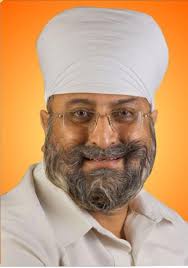
Dr. Surat Singh Malhotra. Over the years, our service portfolio has evolved from basic infrastructure support to offering comprehensive turnkey solutions, covering everything from design and fabrication to on-ground operations and experience curation. We’ve consistently invested in modern production techniques, eco-friendly materials, and digital integrations to align with global standards. Our adaptability and forward-looking approach have enabled us to support both large-scale trade shows and niche exhibitions with equal finesse.
ES. Could you highlight a major event where your team played a pivotal role behind the scenes? What were the primary challenges encountered, and what key insights emerged from the experience?
Dr. Surat Singh Malhotra. One notable event was the execution of a multi-national exhibition that required coordination across 3 cities in a span of 10 days. The logistical complexity, combined with diverse organiser expectations, posed significant challenges. However, through meticulous planning, agile communication, and a highly motivated team, we delivered excellence across all venues. The key takeaway: success in this industry hinges not just on operational strength, but on clarity, trust, and the ability to stay solution-oriented under pressure.
ES. How do you maintain consistency in service quality and operational reliability across varying venues, cities, and organiser requirements?
Dr. Surat Singh Malhotra. Consistency stems from strong systems and even stronger values. We rely on a deeply rooted SOP framework that governs each project, supported by a seasoned leadership team and regionally aligned vendor partnerships. Regular training, pre-event audits, and client collaboration ensure that no detail is overlooked—whether we’re working in Hyderabad, Mumbai, or a Tier-2 city.
ES. What significant trends do you foresee influencing the Indian exhibition industry in the next 3 to 5 years, particularly in terms of technological adoption and integrated services
Dr. Surat Singh Malhotra. Technology will no longer be an add-on but a core driver—AI-powered visitor management, immersive AR/VR exhibits, and hybrid event models will reshape how exhibitions are conceptualised. Sustainability and circular economy models will also gain prominence. Organisers and service providers who can offer integrated, tech-enabled, and eco-conscious solutions will stand out.
ES. From your perspective, what critical gaps or operational hurdles exist within the current Indian exhibition landscape, and how is your organisation working to address them?
Dr. Surat Singh Malhotra. One of the key challenges is the lack of skilled manpower at the grassroots level and the need for greater standardisation in vendor practices. We’ve taken active steps to invest in people—through training modules, upskilling workshops, and process alignment across our ecosystem. Moreover, we advocate for stronger dialogue between organisers, service providers, and industry bodies to foster transparency and long-term partnerships.
ES. As we mark a decade of ‘Walking Together with IESA,’ we’d love to hear your reflections on IESA’s journey and its significance for the industry as a whole.
Dr. Surat Singh Malhotra. IESA has truly been a unifying force in our industry. Over the past decade, it has created a much-needed platform for collaboration, policy dialogue, and professional recognition. I have personally witnessed the shift it has brought—from fragmented service delivery to a more structured, quality-driven ecosystem. Walking this journey with IESA has not only been rewarding for our organisation but also reassuring for the industry’s future.