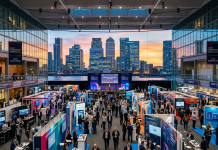
The 11th edition of India Energy Storage Week (IESW) 2025, organized by the India Energy Storage Alliance (IESA), kicks off on July 8th with a grand inaugural ceremony at IICC Yashobhoomi, New Delhi. The event draws participation from over 200 global energy leaders and dignitaries, including Dr. Ajay Mathur (Ex-DG, International Solar Alliance), Professor, IIT Delhi; Malini Dutt, Trade and Investment Commissioner – India, NSW Government; Manish Sharma, Chairman, Panasonic; Stephen Fernands, Founder and President, Customized Energy Solutions (CES); Vinayak Walimbe, Managing Director, CES; and Debmalya Sen, President, IESA.
Addressing the inaugural ceremony, Dr. Ajay Mathur states, “IESW 2025 embodies the collective aspirations of the battery and storage communities, fostering collaboration and knowledge exchange among industry professionals. It serves as a crucial platform where individuals from various sectors—such as battery manufacturing, application, and electricity demand—come together to learn from one another and advance their understanding of the sector.”
As part of the opening session, IESA releases its latest market reports, spotlighting India’s evolving hydrogen landscape. According to the report, India’s hydrogen demand is projected to grow at a CAGR of 3 percent, reaching 8.8 million metric tons per annum (MTPA) by 2032. While more than 9 MTPA of green hydrogen (GH2) project capacity has been announced, very few projects reach final investment decision (FID) or secure long-term offtake agreements. Under the baseline scenario—where 30 percent of the announced capacity becomes operational by 2032—electrolytic and bio-hydrogen could fulfill approximately 31 percent of domestic demand.
Mr. Vinayak Walimbe, Managing Director of CES, adds, “Despite policy interventions and government initiatives to promote the green hydrogen mission, several challenges remain in addressing the urgent issue of decarbonization. The IESA India Hydrogen Report, launched today at IESW 2025, is crucial for raising awareness among policymakers, industry leaders, and stakeholders, helping to accelerate the mission further.”
The report also provides critical insights into India’s National Green Hydrogen Mission. Key developments under the SIGHT (Strategic Interventions for Green Hydrogen Transition) initiative include funding for GH2 production (Tranches 1 and 2), electrolyzer manufacturing, and green ammonia aggregation. Four states account for 82 percent of announced GH2 capacity: Odisha (38%), Gujarat (26%), Karnataka (12%), and Andhra Pradesh (6%). About 72 percent of announced projects focus on ammonia production, while 20 percent have not disclosed end-use applications.
On the cost front, the levelized cost of hydrogen (LCOH) produced via electrolysis remains significantly higher than that of fossil-based hydrogen. Key cost drivers include electricity tariffs, electrolyzer CAPEX (stack and balance of plant), and utilization rates. In the base case, LCOH is estimated to be 2–4 times the cost of fossil hydrogen. Even in optimistic scenarios, it remains 1.5–2.5 times higher—though approaching the prices discovered in India’s first green hydrogen auctions.
Mr. Debmalya Sen, President of IESA, remarks, “With continued government support for clean energy innovation, IESW 2025 brings together industry leaders, policymakers, and global experts to showcase cutting-edge solutions. This platform is key to India’s transition toward a resilient energy system, helping us meet rising energy demands while targeting 5 million tonnes per annum (MMTPA) of green hydrogen production by 2030.”
India’s hydrogen consumers—who account for around 6 percent of total demand—continue to face high landed costs due to storage and transport expenses. Additionally, open-access electricity regulations limit the ability of commercial and industrial users to offset renewable consumption, thereby affecting electrolyzer utilization.
IESW 2025 positions itself as a transformative platform, uniting ministries, global delegations from over 20 countries, and top-tier manufacturers. The event is set to showcase 300+ product innovations across EVs, charging, solar, green hydrogen, batteries, and more. It will also witness seven major factory and product announcements from India’s leading clean tech players.