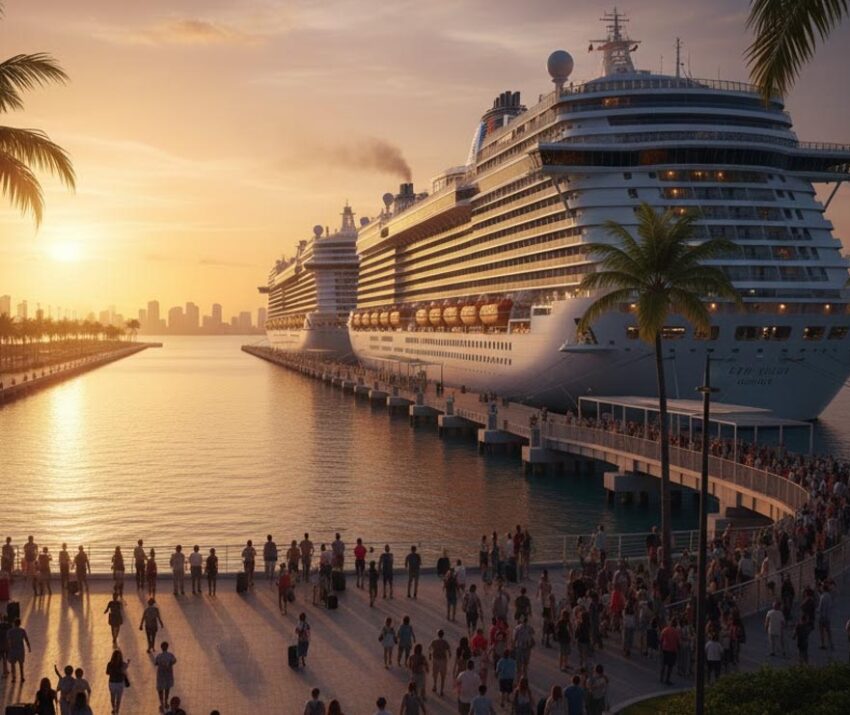
The global cruise tourism sector is preparing for what is projected to be a record-setting year in 2026, with several major ports globally anticipating an unprecedented volume of passengers. Industry projections indicate a substantial rise in travelers, supported by infrastructure expansion and the deployment of new, high-capacity vessels.
Forecasts from the American Automobile Association (AAA) and Tourism Economics project that 21.7 million U.S. residents are expected to take an ocean cruise in 2026. This anticipated growth continues a trend of rising passenger numbers for the fourth consecutive year, highlighting strong consumer demand for cruise vacations.
Four key U.S. ports- Miami, Port Canaveral, Fort Lauderdale (Port Everglades), and Galveston- are central to accommodating this traffic. These Florida and Texas hubs facilitate the vast majority of Caribbean cruises, which remain the most popular destination for American travelers. For instance, the Port of Galveston has recently opened new facilities and anticipates handling an estimated 3.9 million passengers that year. Furthermore, Fort Lauderdale will host the seasonal debut of at least one new cruise ship, underscoring its role in managing capacity.
Internationally, Barcelona, Southampton, Rome (Civitavecchia), and Seattle are also positioned for a high-volume year. Barcelona and Rome serve as vital gateways for the Mediterranean market, while Southampton handles transatlantic and Northern European itineraries. Seattle is the primary departure point for the popular Alaska season.
The collective readiness of these key ports, coupled with the introduction of new ships across various cruise lines, is set to significantly increase the industry’s operational capacity, enabling the predicted high passenger volumes for 2026.