India Maritime Week (IMW) 2025 has solidified its position as the leading international forum for promoting India’s Blue Economy agenda on its first day in Mumbai. With the theme “Uniting Oceans, One Maritime Vision,” the five-day event, which is scheduled for October 27–31, has set an unprecedented financial goal: obtaining investment commitments totaling more than ₹10 lakh crore. Chief Ministers from important coastal states and ministers from 11 other nations attended the event’s inauguration with the Union Home Minister, highlighting its strategic importance and indicating a concerted national and international effort to establish India as a major maritime hub. In order to achieve world-class ports, improved shipping capabilities, and sustainable practices, national policy roadmaps like the Maritime India Vision 2030 and the long-term Maritime Amrit Kaal Vision 2047 are directly in line with this focus. By distributing funds among transformative sub-sectors, more than 600 Memorandums of Understanding (MoUs) will be executed in order to achieve the ambitious investment goal.
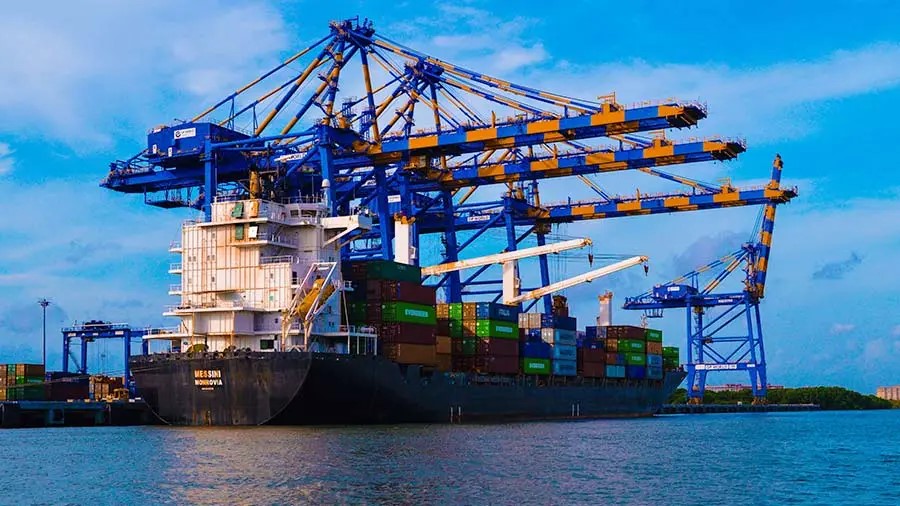
A major shift toward green shipping initiatives, particularly the Green Tug Transition Programme, and the modernization and expansion of port infrastructure important projects like the Vadhvan and Haldia developments being prominent are just two of the crucial areas that these agreements will cover. Additionally, in order to increase domestic capacity, the investment pipeline primarily targets the shipbuilding and repair sector. Additionally, it accelerates the development of inland waterways in order to unlock cost-effective and efficient logistics. Achieving immediate industry buy-in and converting these commitments into concrete, ground-level projects requires the active involvement of key players, such as port authorities and private sector behemoths like Adani Ports.
In addition to the monetary commitments, IMW 2025 has become a hub for networking and thought. With over 100,000 delegates, 500 exhibitors, and 350 speakers from over 85 countries, the event boasts a comprehensive agenda aimed at advancing both policy and business. The QUAD Ports of the Future Conference, which focuses on strategic security and collaboration; the Global Maritime India Summit (GMIS), which is devoted to high-level policy discussions; and the Sagarmanthan- The Great Oceans Dialogue are important concurrent events. Focused discussion on regional investment prospects and global collaborations is ensured by the inclusion of specific country and state sessions. When taken as a whole, this framework guarantees that the IMW 2025 is a pivotal time when strategic discussions are successfully translated into tangible infrastructure and technological developments, firmly establishing the path for India’s maritime comeback and its position as a global leader in the Blue Economy.