Knowledge is universal, and translation is the way to take the stories of India
ES. What key experiences from your professional journey have shaped your leadership approach at NBT?
Yuvraj Malik. Working with various government organisations over the years has helped me gain greater clarity in planning and management. Serving in the Indian Armed Forces has instilled in me discipline and a meticulous, forward-looking approach at all times. It has also trained me to get into the nitty-gritties of processes, helped me foresee challenges, and develop an action plan for contingencies. These experiences have helped me grow and build efficiency in my working style at National Book Trust, India.
ES. What are your priorities in making books more accessible and relevant, especially for younger audiences?
Yuvraj Malik. Today’s younger audience is tomorrow’s leadership. If we want to nurture them, we need to empower them, educate them, and enrich them with quality content, and books are an integral part of this learning process. Our goal at NBT is to provide quality content at affordable prices and make it accessible to all, with a focus on multilingual publishing. This helps develop an aptitude for reading books at an early stage, which then becomes a lifetime habit. Hence, books play an important role in transforming India into a knowledge economy and creating responsible citizens who will play a critical role in nation building.
ES. How do you see publishing evolving to support multilingual learning and digital transformation?
Yuvraj Malik. The National Education Policy 2020 emphasises multilingual learning, and in keeping with that, bilingual content or the three-language formula requires quality content in multiple languages. The best way for a child to learn is in his or her mother tongue or regional language and therefore, there is a strong demand for publishing in regional languages. So far, India’s major publishing is in regional languages, not English. India has become the third largest publishing industry in the world in terms of scale and one of the fastest growing publishing industries, primarily due to the inherent strength of multilingualism in the country.
Going forward, publishing will continue to evolve by strengthening multilingual content creation. Digital learning has also become an integral part of our lives. Our aim is to make the younger generation read, whether through printed books or e-books. Both have their merits, and we must capitalise on the strength of each learning medium equally. Our Rashtriya e-Pustakalaya initiative offers a free “library-in-hand” with over 7000 books in 22 languages and English, available through iOS and Android apps.
ES. How do events like the World Book Fair contribute to collaboration in publishing?
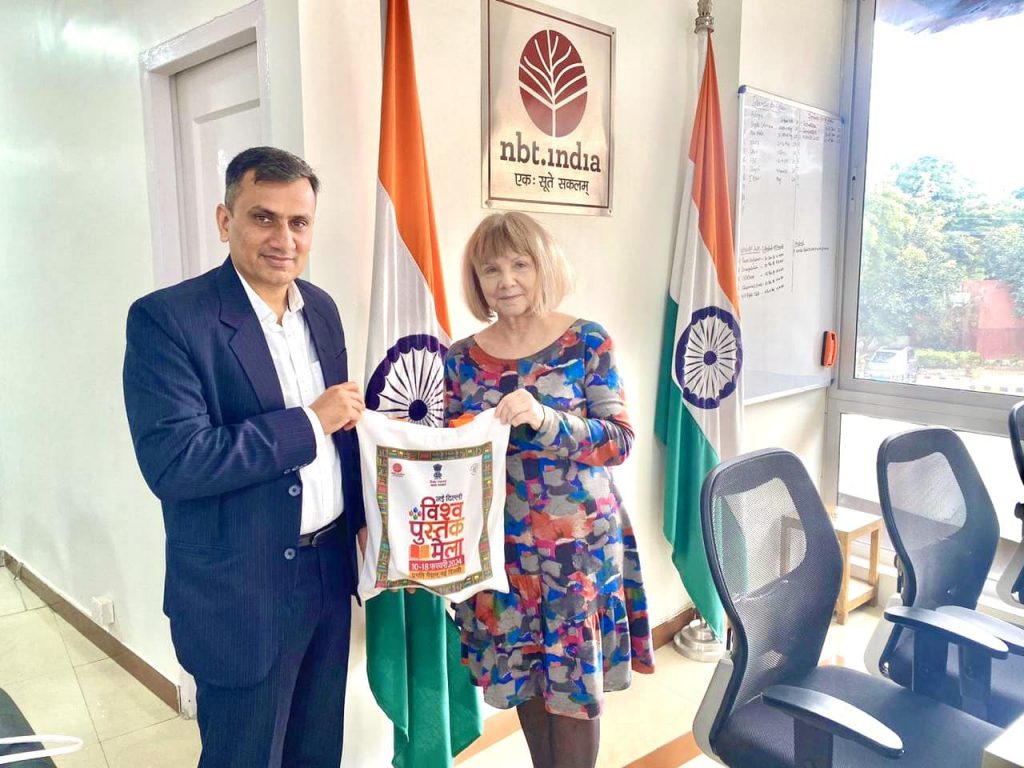
Yuvraj Malik. Events like the New Delhi World Book Fair represent the entire publishing ecosystem of India, where more than 1000+ publishers from across the country come together at over 3000 stalls. More than 600+ literary programmes make the book fair a giant platform not only for publishers, but also for authors and readers. This is why NDWBF is one of the most awaited events of the year.
On its sidelines, B2B events like CEOSpeak and the New Delhi Rights Table, along with international participation such as the International Pavilion and Guest of Honour and Focus Country presentations, provide an opportunity for professionals in the industry to exchange knowledge and best practices. These platforms also facilitate translation projects, helping us take Indian content to a wider audience. Knowledge is universal, and translation is the way to take the stories of India to a wider audience.
ES. What is your long-term vision for positioning India as a global knowledge hub?
Yuvraj Malik. The 21st century is the ‘century of knowledge’, and books are the strongest source of knowledge. If we want to capitalise on the shift towards a knowledge economy, we need to focus on our books, publishing, and content quality. National Book Trust, India, as the nodal agency for promoting books, is committed to taking Indian publishing to the global stage. We aim to engage with a whole-of-government approach and take the entire publishing ecosystem forward through collective participation. We are also focusing on pathbreaking initiatives like the PM YUVA Scheme to promote reading and writing among youth, help provide quality content, and create an overall culture of reading. This is central to our vision of positioning India as a global knowledge hub.