ES. You have spent more than three decades working with SMEs, handicrafts, exports and the exhibition industry. Looking back, which experiences have shaped your journey the most, and how have they influenced your vision for India’s exhibition sector?
Dr. Rakesh Kumar. It has been a long journey, and when I look back, I realise that every stage has been connected to the next. I started by working closely with the SME and handicraft sector, focusing on helping businesses grow, find markets and become more competitive internationally. We worked with handicraft clusters such as Jodhpur, Jaipur, Uttar Pradesh and the North-Eastern regions. This eventually led to initiatives like the Indian Handicrafts & Gifts Fair, which grew into a major international platform for the sector.
Over time, I realised that market access alone was not enough. The industry also needed better design, product development, skills and stronger institutions. This led to initiatives such as the National Centre for Design & Product Development, the Handicrafts & Carpet Sector Skill Council, the Buying Agents Association and systems such as VRIKSH.
When we established India Exposition Mart in 2006, the thinking remained the same. We wanted to create world-class infrastructure that could connect Indian businesses with international markets. Today, IEML has evolved beyond being a venue into a larger ecosystem of exhibitions, hospitality, services and market access. The biggest lesson from my journey is that you cannot build an industry by looking at only one part of it. You have to understand the entire ecosystem and identify what is missing. After more than 30 years, I still believe there is much more to do, and every change in the industry creates a new opportunity to build something better.
ES. Bharat Tex 2026 has created a remarkable impact in just its third edition. From your perspective, what made this edition such a defining moment for India’s textile and exhibition industry?
Dr. Rakesh Kumar. I would say Bharat Tex 2026 was an amazing experience and, more importantly, an important moment for the entire textile industry. This was only the third edition of Bharat Tex, but the scale that we achieved was comparable to, and in some respects larger than, exhibitions that have been running internationally for 20–25 years.
This edition brought together more than 1,600 exhibitors, with participation from 16 countries, while buyers and visitors came from 130 countries. We had more than 6,000 overseas buyers, over 1,20,000 trade visitors, and nearly 20,000 product lines representing different segments of the textile industry. But for me, the numbers are only one part of the story. What was more important was the completeness of the platform. We had everything—from yarn, fabrics and accessories to apparel, fashion, technical textiles and home textiles.
Sustainability was also a major focus. We had knowledge sessions, masterclasses, roundtables, investor summits and international business engagements taking place alongside the exhibition. The response from the industry was extraordinary. Every inch of Bharat Mandapam was sold out. We had to use the upper floors of halls that are not normally used by many exhibitions. We created additional hangar spaces, including Hall 1A and another temporary space at the helipad ground, simply to accommodate more exhibitors. Even after all this, there were many who could not be accommodated. That created what I would call a genuine FOMO effect. Whether you were an exhibitor, buyer or visitor, you felt that you should be part of Bharat Tex. That is a very important stage for any exhibition to reach.
We also generated serious business enquiries of more than US$2.8 billion, apart from thousands of one-to-one business meetings. So, Bharat Tex has gone beyond being an exhibition. It is creating a new image of India as a major global sourcing destination for the textile industry, and I believe its impact will be long-lasting.
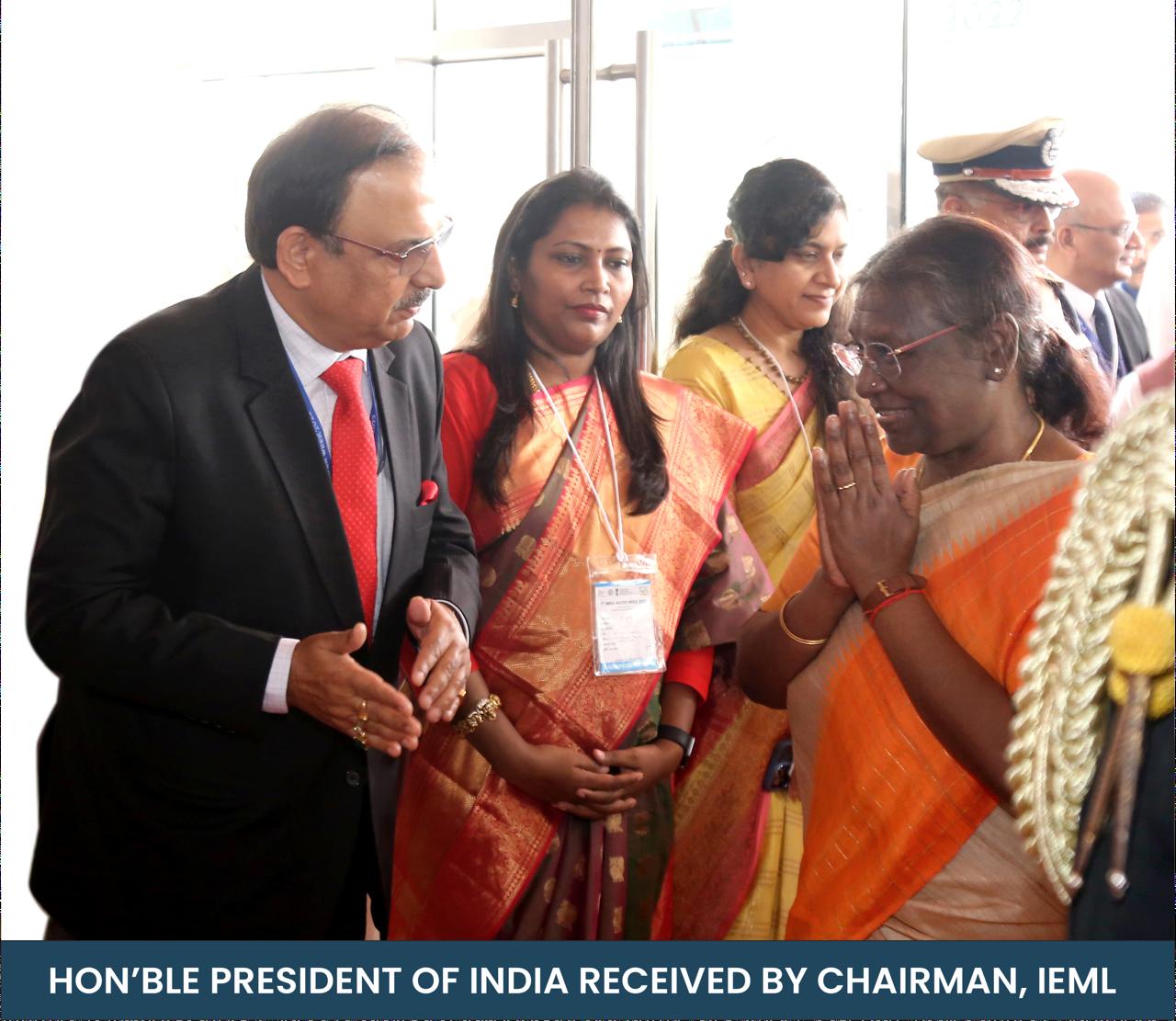
ES. You have been associated with India’s exhibition ecosystem for many years, including the establishment of IEML in 2006. How do you see the journey of IEML, and how has its role evolved over these two decades?
Dr. Rakesh Kumar. When India Exposition Mart was established in 2006, the primary objective was to create world-class exhibition infrastructure. At that time, our role was essentially that of a venue provider. But the industry has changed significantly over the last 15–20 years, and we also realised that IEML had to change with it. Today, we have much more than a venue. While our strength remains hosting third party events, we have also developed different verticals to support our growth. One is our own exhibitions, where we create and operate our own intellectual properties. The India International Hospitality Expo is one example, and the UP International Trade Show is another important platform. We also have several other IPs in the pipeline.
The second vertical is providing professional services to other organisations. There are large exhibitions where organisers need a strong professional team to manage the scale and complexity of the event. We work with such organisations and provide large-scale event services. The commercial model can vary- sometimes it is revenue sharing, and sometimes it is a fee-based structure. The third area is venue development outside our existing campus. We are now working on new venues in different parts of the country. Mohali is one of the projects that is coming up, and we are working there in partnership with another company. There are several more destinations in the pipeline, and over the next couple of years, you will see IEML’s presence expanding to four or five additional venues. And next is hospitality and hotels segment where we have created significant strides in the last two years & we are very bullish about its potential.
So, the journey has really been from being a venue provider to becoming an integrated business events and exhibition ecosystem. And I think that evolution is necessary because the future of the industry is not only about how many square metres of exhibition space you have. It is about what ecosystem you can create around that space and what value you can deliver to organisers, exhibitors and buyers.
ES. Your work has historically been closely connected with SMEs, handicrafts and exporters. How important is it for you to ensure that this wider ecosystem benefits from the growth of exhibitions and business events?
Dr. Rakesh Kumar. This is actually very close to my heart because my association with the SME and handicraft sector goes back many years. We have around 900 permanent ExpoMarts, and these are an important backbone for the handicraft, handloom and cottage sectors. Most of these businesses are exporters, and their requirement is not only to participate in an exhibition. They need support in reaching international markets and building a reliable supply chain.
That is why we have started looking at the complete journey beyond the exhibition itself. We have established warehouses in the United States and Europe, particularly in Holland, and we have showrooms in countries such as Holland, Germany and Switzerland. We also started a supply chain management company in the UK around the time the UK FTA was being flagged off. This activity comes under our Expo Bazaar India Curated model. The idea is very simple: if a small or cottage-sector exporter has a good product, we should not only help him exhibit it-we should also help him reach the market. That is where I believe the real strength of our ecosystem lies. We understand the handicraft, handloom, cottage and SME sectors because that has been our core mandate for many years. We are now taking that strength and applying it to other areas. At the end of the day, whether we are talking about exhibitions, hospitality, supply chains or international market access, the soul remains the same: working for the sector, working for SMEs and creating opportunities for businesses to grow.
ES. Hospitality and supporting infrastructure are increasingly becoming integral to the success of an exhibition destination. What is the larger ecosystem you are building around IEML?
Dr. Rakesh Kumar. I have always believed that an exhibition venue cannot operate in isolation. If you want to build a successful MICE destination, you need hotels, hospitality, food and beverage, logistics, business services and other supporting infrastructure around it. That is why hospitality has become an important vertical for us under Indeva Hotels.
We have developed different brands, including Expo Inn Suites & Convention, which is our five-star hotel within the India Expo Mart complex. We also have other hospitality properties and brands in close proximity to the exhibition centre, and further developments are coming up in other destinations.We are also looking at complementary businesses such as coffee and food-and-beverage concepts because when you create an exhibition destination, the experience of the organiser, exhibitor and visitor goes beyond the exhibition hall. So, we are trying to build a complete ecosystem.
The same philosophy applies to our expansion strategy. When we go to a new destination, we don’t want to think only about putting up exhibition halls. We have to look at the complete business environment around those halls.This is also why I see such a large opportunity for the exhibition sector in India. There is enormous potential not only in organising exhibitions but also in hospitality, venue development, event services, logistics and all the related activities that support the business events industry. Our objective is to use the experience and strengths we have developed through IEML and extend that ecosystem to other parts of the country.